Chicken Farmers of Canada (CFC) recently announced a detailed update to its On-Farm Food Safety Program (OFFSP) and the requirement for a physical barrier at broiler barn entry.
CFC Directors have approved eliminating the option of using a “clearly identified line” to separate the Controlled Access Zone (CAZ) and the Restricted Access (RA). This is being replaced with an OFFSP requirement for a physical barrier between the CAZ and the RA, to ideally be installed by A-204 (August 23, 2026).
Read the CFC announcement on Physical Barriers
.
Many growers have been curious about the details — why, how soon, and what is actually required.
For more comprehensive rationale, details, tips, and examples, please see the CFC’s official OFFSP Physical Barrier Addendum (which can be found under Grower Resources -> Forms and Downloads -> Field Service Forms). Here’s a summary to get you started.
Read the CFC OFFSP Physical Barrier Addendum
Due to the on-going threat of HPAI, the CFC has been re-assessing biosecurity programming by reviewing scientific literature and epidemiological reports on HPAI infections. As a result, CFC has determined that the minimum entrance requirements for barns should be increased. Improved biosecurity in a critical place.
Implementation can be phased-in. In many cases building a physical barrier will be straightforward. However, for some farms this will be a larger change that will require more time and/or construction. There are two deadlines for growers to respond to:
- August 23, 2026: A physical barrier must be installed, or a written action plan for implementation prepared, beginning in period A-204. Starting on this date, having an adequate physical barrier at entry or a related sufficient action plan will be part of meeting your farm audit.
- April 4, 2027: In the case of an action plan for implementation, the physical barrier must be in place by period A-208.
.
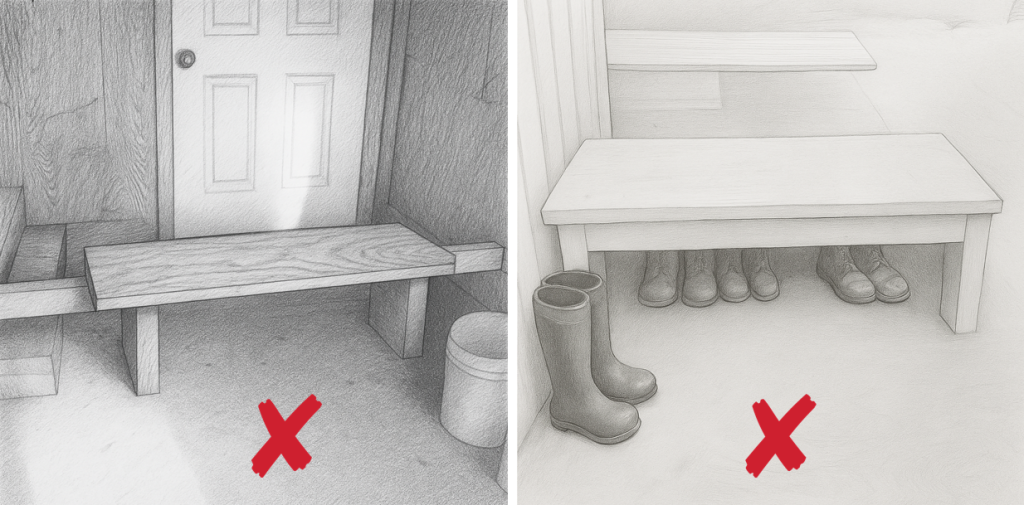
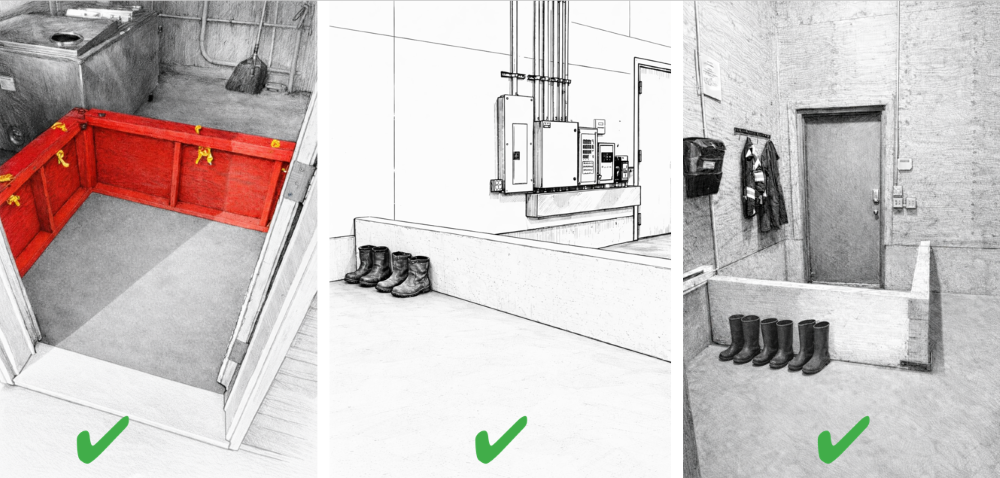
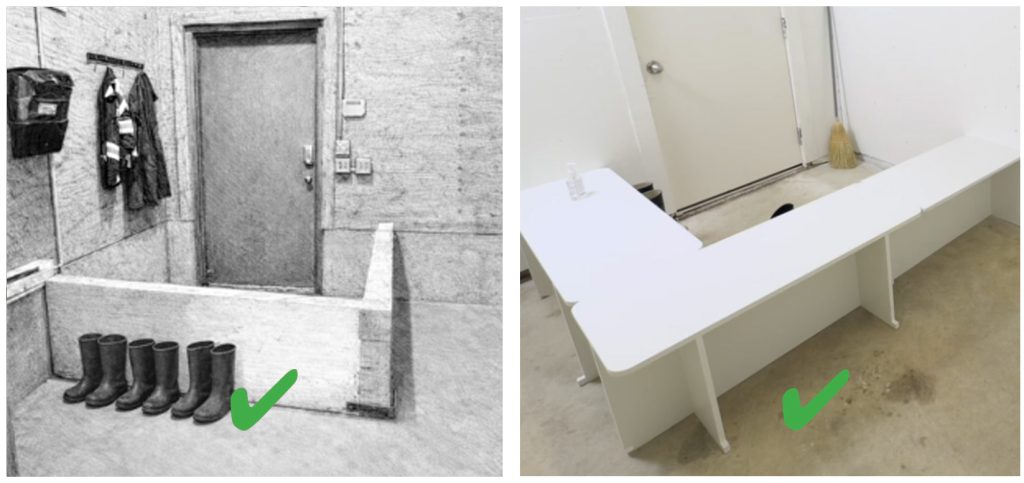
The main goal is to further prevent organic material from the CAZ contaminating the RA, and vice versa. To do so, the physical barrier must meet some requirements or should follow some best practice (read the official Addendum and see the points marked “MD” for requirements). These include:
- physical presence as a bench or a step-over, wall-to-wall and flush to the floor
- separate CAZ and RA, including forced footwear and encourage clothing change
- adequate space for people to comfortably change and store footwear, and change into RA clothing or gear
- well-lit and well-marked with signage and highly visible colour(s)
- account for safety, to not imped exiting in the case of an emergency or stand higher than 12 inches to not be a tripping hazard
.
Let’s continue to take biosecurity seriously, keep our birds safe, and provide British Columbians with the best quality food.
If you’ve reviewed all the resources and still have questions or concerns, please reach out to your BCCMB Field Service Representatives at inspection@bcchicken.ca.
Special thanks to the CFC for the repurposing of their material.
.